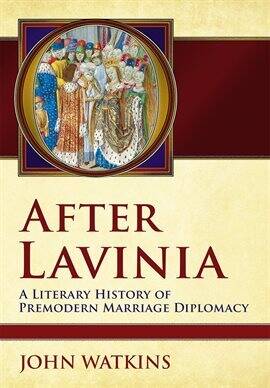
The Renaissance jurist Alberico Gentili once quipped that, just like comedies, all wars end in a marriage. In medieval and early modern Europe, marriage treaties were a perennial feature of the diplomatic landscape. When one ruler decided to make peace with his enemy, the two parties often sealed their settlement with marriages between their respective families. In After Lavinia, John Watkins traces the history of the practice, focusing on the unusually close relationship between diplomacy and literary production in Western Europe from antiquity through the seventeenth century, when marriage began to lose its effectiveness and prestige as a tool of diplomacy. Watkins begins with Virgil's foundational myth of the marriage between the Trojan hero Aeneas and the Latin princess, an account that formed the basis for numerous medieval and Renaissance celebrations of dynastic marriages by courtly poets and propagandists. In the book's second half, he follows the slow decline of diplomatic marriage as both a tool of statecraft and a literary subject, exploring the skepticism and suspicion with which it was viewed in the works of Spenser and Shakespeare. Watkins argues that the plays of Corneille and Racine signal the passing of an international order that had once accorded women a place of unique dignity and respect.
"Watkins raises authentically interesting questions about politics, gender, and religion, and demonstrates the value of literary sources and literary analysis for this topic. It is especially valuable for assembling a range of texts on interdynastic marriage, including Jordanes, Gregory of Tours, the Venerable Bede, Paul the Deacon, Dudo, William of Apulia, Wace, William of Malmsbury, and others,
Speculum
"Embarks upon an impressive tour of literary history to show how marriage acts served transnational diplomacy.... Historians will benefit from reading John Watkins' intellectually engaging literary history."
H-France
"Watkins's study of marriage diplomacy is a compelling work which proves an indispensable reference for readers of all creeds: from the literary analyst, to the specialist in diplomacy, gender studies or conflict studies, and to the lay reader trying to understand a volatile zeitgeist.... Dismissing the place of literature in the political episteme of a time and of all time has never been better a