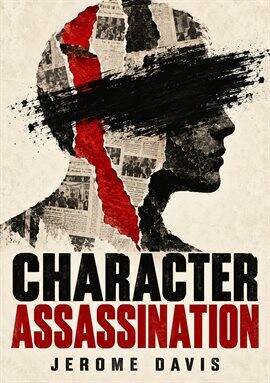
What happens when the most powerful weapon wielded against a person is not a sword, a gun, or a fist, but a lie? In Character Assassination, Jerome Davis delivers a searing and unflinching examination of one of the most insidious forces in human society, the deliberate destruction of a person's reputation, legacy, and identity through calculated smear, distortion, and manufactured falsehood. Written in 1950 against the backdrop of one of America's most turbulent and paranoid political eras, this book arrives with the urgency of a warning bell and the precision of a surgeon's scalpel, cutting to the heart of how powerful institutions, political machines, and ideological movements systematically dismantle individuals who dare to challenge them. Davis writes not as a distant observer but as a man who has witnessed the machinery of destruction up close, and his voice carries the weight of hard-won conviction.
Davis takes readers deep into the shadowy world where truth is weaponized and reputations become battlegrounds. He exposes the methods, the motivations, and the devastating human cost behind campaigns designed to silence, humiliate, and erase. The atmosphere of this book is electric with tension, drawing readers into real cases and historical examples that feel disturbingly familiar even decades later. Davis paints a portrait of a society where the courtroom of public opinion can be more brutal and less fair than any formal trial, where accusation carries the force of conviction, and where the target of a smear campaign often has no effective means of defense. The emotional power of this work lies in its refusal to treat its subject as abstraction. These are real lives, real careers, real families shattered by forces operating in darkness.
What makes this book essential reading today is not simply its historical significance but its profound and unsettling relevance. In an age of social media pile-ons, viral misinformation, and politically motivated takedowns, Davis's analysis feels less like history and more like prophecy. Readers who engage with this work will come away with sharper eyes for recognizing the tactics of character destruction and a deeper appreciation for the courage required to stand against them. This is a book that challenges, provokes, and ultimately empowers, offering not just diagnosis of a social disease but a call to defend truth, integrity, and the dignity of individuals against the corrosive power of deliberate deception.