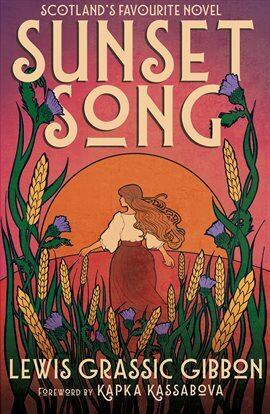
Faced with a choice between her harsh farming life and the seductive but distant world of books and learning, Chris Guthrie eventually decides to remain in her rural community, bound by her intense love of the land. However, the intervention of the First World War leaves her choice in tatters. Chris is now a widowed single mother: her farm, and the land it occupies, is altered beyond recognition - trees torn down, people displaced. But although the novel describes a way of life which is in decline, it also presents a strong image of hope. Chris adapts to her new world, displaying an intuitive strength which, like the land which she loves, endures despite everything. "Sunset Song" is a testament to Scotland's agricultural past, to the world of crofters and tradition which was destroyed in the First World War. It is a powerful description of life in the first few decades of the century through the evocation of change and the lyrical intensity of its prose. Renowned expert Ian Campbell has produced the first new scholarly text for fifteen years and has the blessing of the Lewis Grassic Gibbon estate.
"'When I read Lewis Grassic Gibbon's Sunset Song in my mid-teens I entered into it with such wholehearted love that I longed to live inside it . . . The rhythms of the prose are incantatory, musical . . . Chris is the centre of the novel and its genius, vivid on every page where she's present'"
The Guardian
"'His three great novels have the impetus and music of mountain burns in full spate'"
Observer
"'Portrayed with a lyrical intensity that echoes through the years and still resonates today'"
The New York Times
"'An evocative look at female life on the Scottish frontier . . . Sunset Song is the story of a resilient young woman during the early twentieth century. Her profound identification with the land is her source of renewal and strength as she endures harrowing family circumstances and, eventually, the devastating fallout of the First World War'"