Books, videos, and music - all free from your public library!
LoginSign Up

Footer

Hoopla logo, Go to homepage
  • For Patrons
  • For Libraries (opens in new window)
  • For Vendors (opens in new window)
  • Facebook (opens in new window)
  • X (opens in new window)
  • Instagram (opens in new window)
  • YouTube (opens in new window)
  • TikTok (opens in new window)
  • LinkedIn (opens in new window)

Our Company

  • Our Story
  • Get Hoopla for your Library (opens in new window)
  • Get your content on hoopla (opens in new window)
  • Join our team (opens in new window)
  • Accessibility Statement

Our Content

  • Audiobooks
  • Ebooks
  • Movies
  • Television
  • Comics
  • BingePasses
  • Music
  • The Loop Blog

Help

  • Help Center
  • Submit Feedback
  • Facebook (opens in new window)
  • X (opens in new window)
  • Instagram (opens in new window)
  • YouTube (opens in new window)
  • TikTok (opens in new window)
  • LinkedIn (opens in new window)
  • Download on the App Store (opens in new window)
  • Get it on Google Play (opens in new window)
  • Available at Amazon Appstore (opens in new window)
© 2026 Midwest Tape, LLC. All rights reserved. Privacy Policy | Terms of Use
  • Hoopla logo
  • Browse
  • My Hoopla
  • Log In
  1. Navigate Home
  2. Ebooks
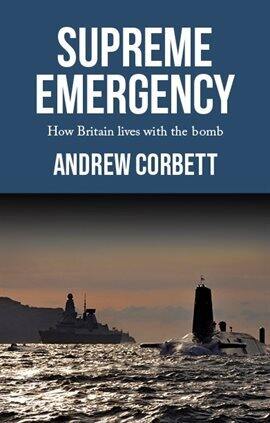
  3. Supreme Emergency

EBOOK

Supreme Emergency

How Britain lives with the Bomb

Andrew Corbett
(0)
sign up
Pages
248
Year
2022
Language
English
Publisher
Manchester University Press

About

In Supreme emergency, an ex-Trident submarine captain considers the evolution of UK nuclear deterrence policy and the implications of a previously unacknowledged aversion to military strategies that threaten civilian casualties. Drawing on extensive archival research, the book provides a unique synthesis of the factors affecting British nuclear policy decision-making and draws parallels between government debates about reprisals for First World War zeppelin raids on London, the strategic bombing raids of the Second World War and the evolution of the UK nuclear deterrent. It concludes that among all the technical factors, an aversion to being seen to condone civilian casualties has inhibited government engagement with the public on deterrence strategy since 1915.
Related Subjects

  • Comparative Politics
  • Political Science
  • Adult Nonfiction
  • Military Policy
  • Public Policy
  • 21st Century
  • Great Britain
  • Europe
  • History

Artists

Andrew CorbettAuthor